
You cannot improve what you cannot see.
In most carrier operations, decision-making runs on a combination of experience, instinct, and incomplete information. The owner knows which lanes feel profitable. The dispatcher knows which drivers are reliable. The billing manager knows which customers pay slowly. But none of it is connected, quantified, or accessible in real time.
That is the difference between surviving and scaling. Surviving is managed by instinct. Scaling requires visibility.
The Problem with Gut-Driven Decisions
Instinct is not wrong. Experienced operators develop an intuition that serves them well. But instinct has limits:
- It does not scale. When you are running 15 trucks, the owner can keep most of the operation in their head. At 50 trucks, that is impossible. At 150, it is reckless.
- It is not transferable. When the person with the instinct leaves — retires, gets sick, or takes a vacation — the intelligence leaves with them.
- It is not auditable. "I had a feeling about that lane" is not a defensible business decision when margins are thin and investors or partners are asking questions.
- It is slow. By the time you realize a lane has gone unprofitable based on feel, you have already lost money on it for weeks.
Data does not replace instinct. It validates it, challenges it, and extends it.
What Modern Carrier Visibility Looks Like
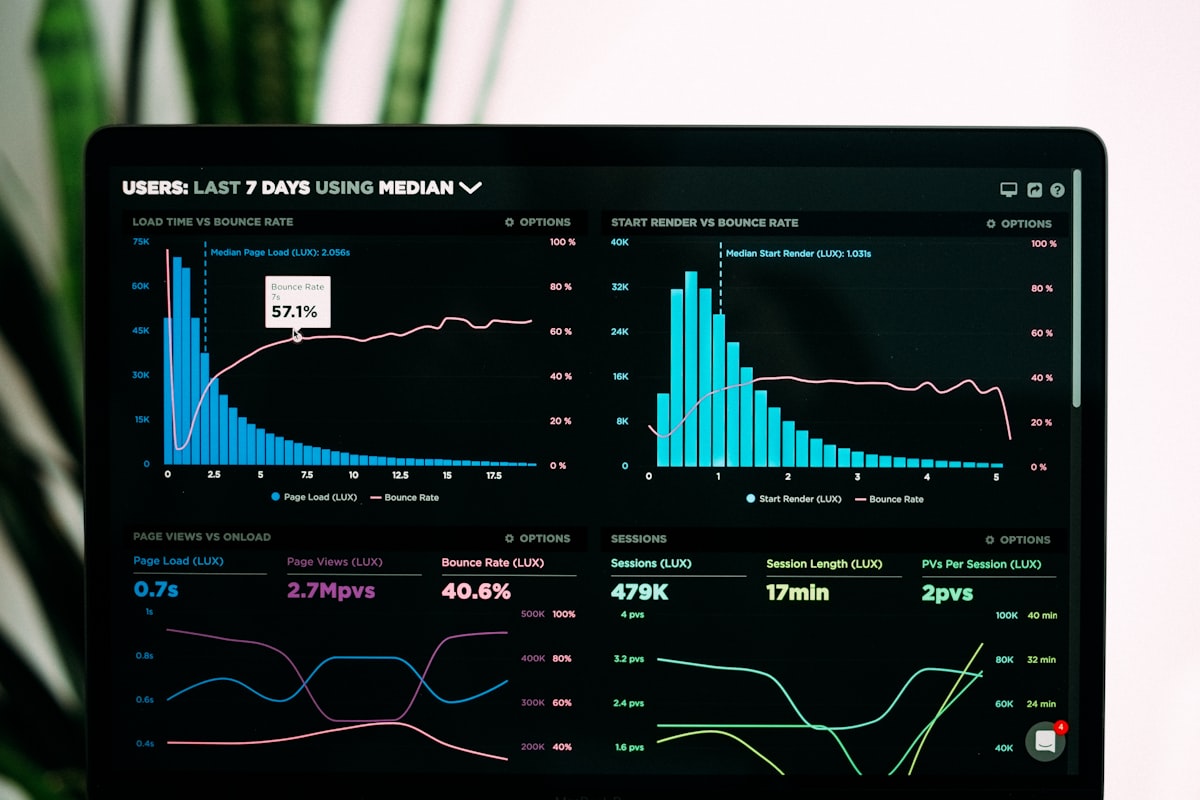
A modern carrier command center is not a single screen or a weekly report. It is an integrated view of operations, finance, and fleet performance that updates in real time and is accessible to everyone who needs it.
Live Fleet Tracking Dashboards
Knowing where every truck is, right now, is table stakes. But a real fleet dashboard goes beyond dots on a map:
- Current load status and ETA accuracy
- Hours-of-service remaining per driver
- Next scheduled pickup and delivery windows
- Alerts for late departures, missed check calls, or route deviations
This is not about surveillance. It is about operational awareness. When dispatch can see the full picture at a glance, they make better decisions faster.
KPI Tracking: The Numbers That Matter
Not all metrics matter equally. For carrier operations, these are the ones that drive decisions:
| KPI | What It Measures | Why It Matters |
|---|---|---|
| Revenue Per Mile (RPM) | Total revenue divided by total miles | The fundamental measure of rate quality |
| Cost Per Mile | All-in operating cost per mile driven | When RPM exceeds cost per mile, you profit. When it does not, you lose. |
| Deadhead Percentage | Empty miles as a percentage of total miles | Every point of reduction goes directly to margin |
| Dwell Time | Average time spent at shipper and receiver facilities | Time is the most expensive thing a carrier wastes |
| Days to Invoice | Time between delivery and invoice sent | Directly impacts cash flow velocity |
| Driver Utilization | Percentage of available hours spent driving loaded | Underutilized drivers are the most expensive cost you do not see |
Tracking these KPIs weekly — or better yet, daily — transforms decision-making from reactive to strategic.
Maintenance Forecasting
Unplanned maintenance is a margin destroyer. A truck that breaks down on the road costs you the repair, the tow, the missed load, the driver's time, and potentially the customer relationship.
Predictive maintenance uses mileage data, service history, and manufacturer intervals to forecast when equipment will need attention — before it fails. The shift from break-fix to planned maintenance is one of the highest-ROI investments a carrier can make.
Fuel Optimization Insights
Fuel is typically the second-largest expense for a carrier after driver pay. Yet most carriers have only a vague sense of their fuel economy by truck, route, or driver. When fuel data is connected to route data and driver behavior data, patterns emerge:
- Which trucks are consuming disproportionate fuel
- Which routes have the best fuel stop options
- Which drivers could benefit from fuel-efficient driving coaching
- Whether fuel card purchases match expected consumption
A 5% improvement in fuel efficiency across a 50-truck fleet saves tens of thousands of dollars annually. But you cannot improve what you do not measure.
From Dashboard to Decision
Data without action is just decoration. The value of a carrier command center is not the screens — it is the decisions those screens enable:
- Pricing decisions — Know your true cost per lane before you quote a rate, not after.
- Capacity decisions — Deploy trucks where margin is highest, not just where loads are available.
- Customer decisions — Identify which customers are profitable and which are costing you money with detention, slow payment, or low rates.
- Growth decisions — Know exactly when adding a truck will be profitable and where it should run.
The difference between surviving and scaling is visibility. Visibility comes from data. Data comes from integrated systems.
Building Your Command Center
You do not need to build a NASA control room. You need a system that connects the data you already have:
- Start with integration. If dispatch, tracking, billing, and maintenance are in separate systems, connect them. Siloed data produces siloed decisions.
- Define your core KPIs. Pick five to seven metrics that matter most to your operation. Track them consistently.
- Make data accessible. Dashboards that only the owner can see are not useful. Operations managers, dispatchers, and drivers all benefit from relevant visibility.
- Review weekly. Data that is collected but never reviewed is the same as data that does not exist. Build a weekly rhythm of reviewing KPIs and adjusting.
- Act on what you find. The point of visibility is action. Every insight should lead to a decision or an experiment.
The carriers who build real visibility into their operations are the ones who will set the terms in their markets — not the ones with the most trucks, but the ones who know exactly what every truck is doing and whether it is worth doing.
Ready to see your operation clearly?
Cogent Cloud brings dispatch, tracking, billing, and analytics into one platform so you can make data-driven decisions in real time.
Connect With Our Team